Understand the Douro’s three subregions before choosing where to spend your estate time: Baixo Corgo, Cima Corgo and Douro Superior. This guide owns regional geography, the meaning of a quinta and the relationship between landscape and visits. It does not shortlist guided wine-day packages or reserve estate sessions. Use the wine-style comparison for Port versus DOC and the winery guide for individual visitor programmes.
On this page · 6 sections
Read the region from west to east
Portugal’s wine authority distinguishes the three subregions within the Douro. The table below is a visitor-orientation framework, not a classification of quality or a promise that every estate in one zone offers the same experience. The underlying subdivision is described by IVV and IVDP.
| Area | Visitor orientation | A sensible first planning decision |
|---|---|---|
| Baixo Corgo | Western part of the demarcated wine region; Régua is a useful anchor | Combine regional interpretation with one nearby visit |
| Cima Corgo | Central wine-country context around Pinhão | Build a town, river and estate day rather than a whole-region circuit |
| Douro Superior | Further inland towards the eastern region | Allow a dedicated itinerary instead of squeezing it into a Pinhão day |
The map on this site is a schematic. Administrative wine boundaries, the river’s course and practical roads are different layers, so a regional label alone cannot provide a transfer time.
What a quinta actually tells you
A quinta is an estate. The word can appear in a producer’s name, a visitor attraction, a restaurant or accommodation. It does not certify that you can turn up, walk anywhere on the land or enter a working cellar. “Quinta stay” and “winery visit” are also separate products, even when they share a property.
For trip planning, translate the estate name into an actual visitor activity: a hosted cellar visit, tasting, vineyard walk, lunch or overnight stay. Then locate the visitor entrance and identify the transport required. This simple step prevents the common mistake of treating a wine label as an itinerary stop.
Why the terraces look different
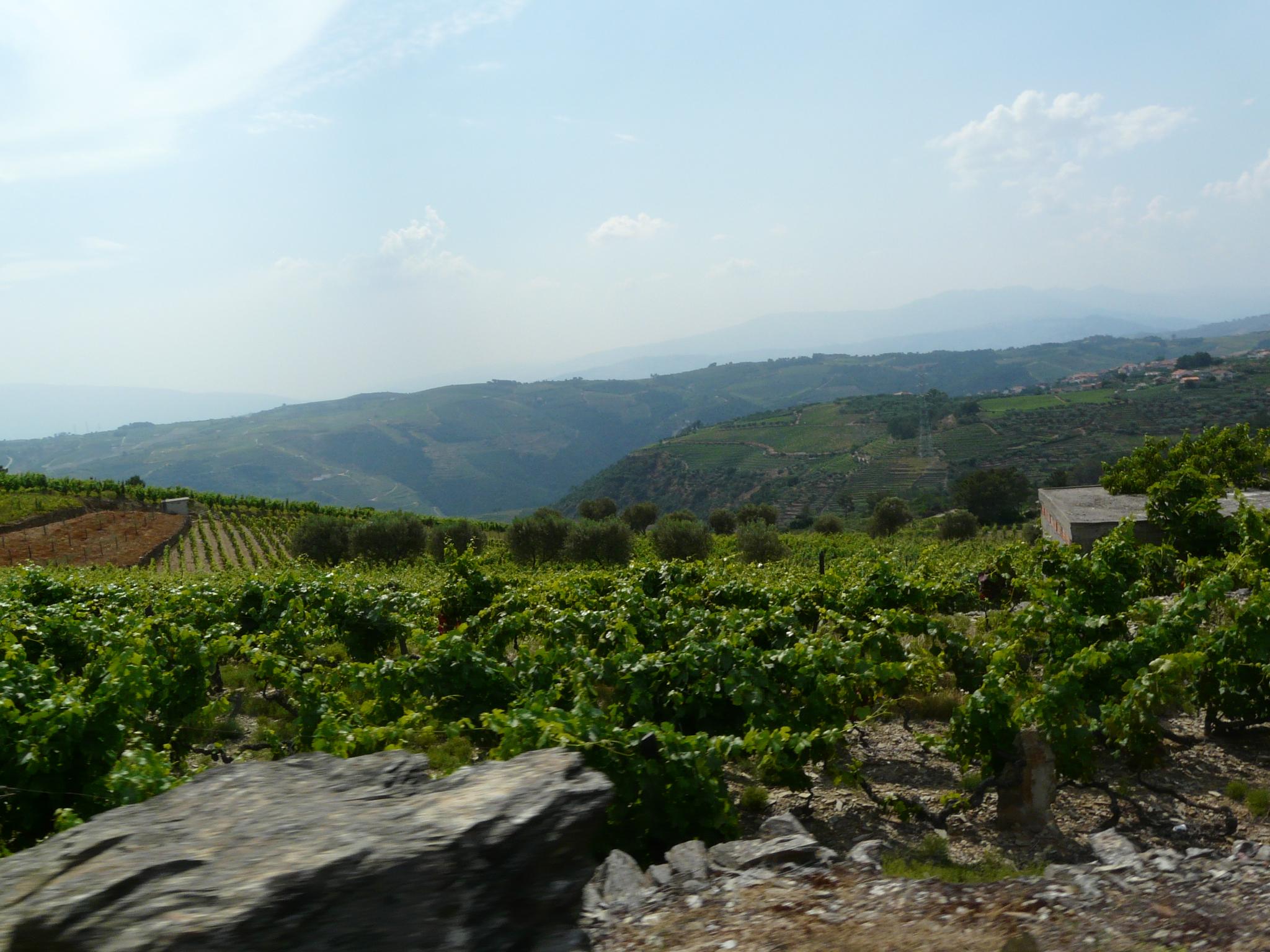
The Douro’s landscape is made through cultivation rather than being a scenic backdrop that happens to contain vines. Narrow stone-supported terraces, broader planted bands, tracks and buildings are evidence of how steep land has been organised for work. UNESCO’s account explains the region as a cultural landscape with different generations of terracing; the inscription is not a list of venues open to visitors. UNESCO: Alto Douro Wine Region.
On a visit, look at the relationship between the rows, access tracks and river rather than judging a viewpoint only by how much water is visible. A guided vineyard walk can help connect the view with production. It is a more specific choice than adding an estate name to a general road tour.
Recognise grape names as well as place names
The wine map and the tourist map answer different questions. A subregion describes where wine is grown; a visitor programme describes what you can actually enter and learn. Neither “quinta” nor a famous Port brand proves that a particular visit includes a vineyard, winery and tasting of both fortified and still wines.
For the wine itself, learn a few local names. IVDP identifies Touriga Franca, Tinta Roriz, Touriga Nacional and Tinta Barroca among the region’s common red varieties, and Rabigato, Malvasia Fina, Moscatel Galego Branco and Viosinho among the whites. These are grape varieties, not villages or brands. Tinta Roriz is also known as Tempranillo in Spain. IVDP grape-variety guide.
Douro reds are often blends, although single-variety wines exist. Use a tasting to connect the producer’s choice of grapes with the finished wine rather than expecting one grape to represent an entire valley. A still-wine appointment can therefore answer a different question from a Port-ageing comparison even when both take place on the same estate. The wine-category comparison explains that second distinction.
A first visit should concentrate, not conquer
For a first day, select either a Régua-led or Pinhão-led plan. A museum-and-estate day, or a town-and-river day with one tasting, can reveal more than a hurried tour that attempts every recognised name. The return journey matters especially if you arrive by rail: an estate outside the station town is a separate connection.
An overnight gives the region a different rhythm. You can separate arrival from the main visit and give a second place its own block of time. It does not remove the need for transport, but it reduces the temptation to fit every interest between two trains.
Turn the geography into a short brief
Write one sentence stating your area and priority: “Pinhão, one estate and river time” is more actionable than “see the Douro”. Add the travel mode, time available and who is coming. With that brief, you can compare a guided day, private transport or independent reservations without changing the objective each time.
Use the region map for orientation and where to stay if you want more than a day. Actual winery programmes belong on the estate-visits page, where published visitor formats are distinguished from fictional tour examples.
Sources for this guide
Linked at the relevant claims above, and collected here for further reading. Primary-source context accessed 9 November 2026. Indicative routes and comparison verdicts are our editorial analysis; fictional tool data remains separate.
- IVV ivv.gov.pt
- IVDP ivdp.pt
- UNESCO: Alto Douro Wine Region whc.unesco.org
- IVDP grape-variety guide ivdp.pt