For things to do in Peso da Régua, use the Douro Museum, riverfront and town context as your core, then decide whether an estate excursion belongs in the remaining time. This guide owns the place and its sights. It does not invent Régua-departing tours or replace the Pinhão-versus-Régua base comparison. Check the local-departure guide only when you are choosing an activity with confirmed collection or embarkation here.
On this page · 7 sections
Why Régua matters to the wine story
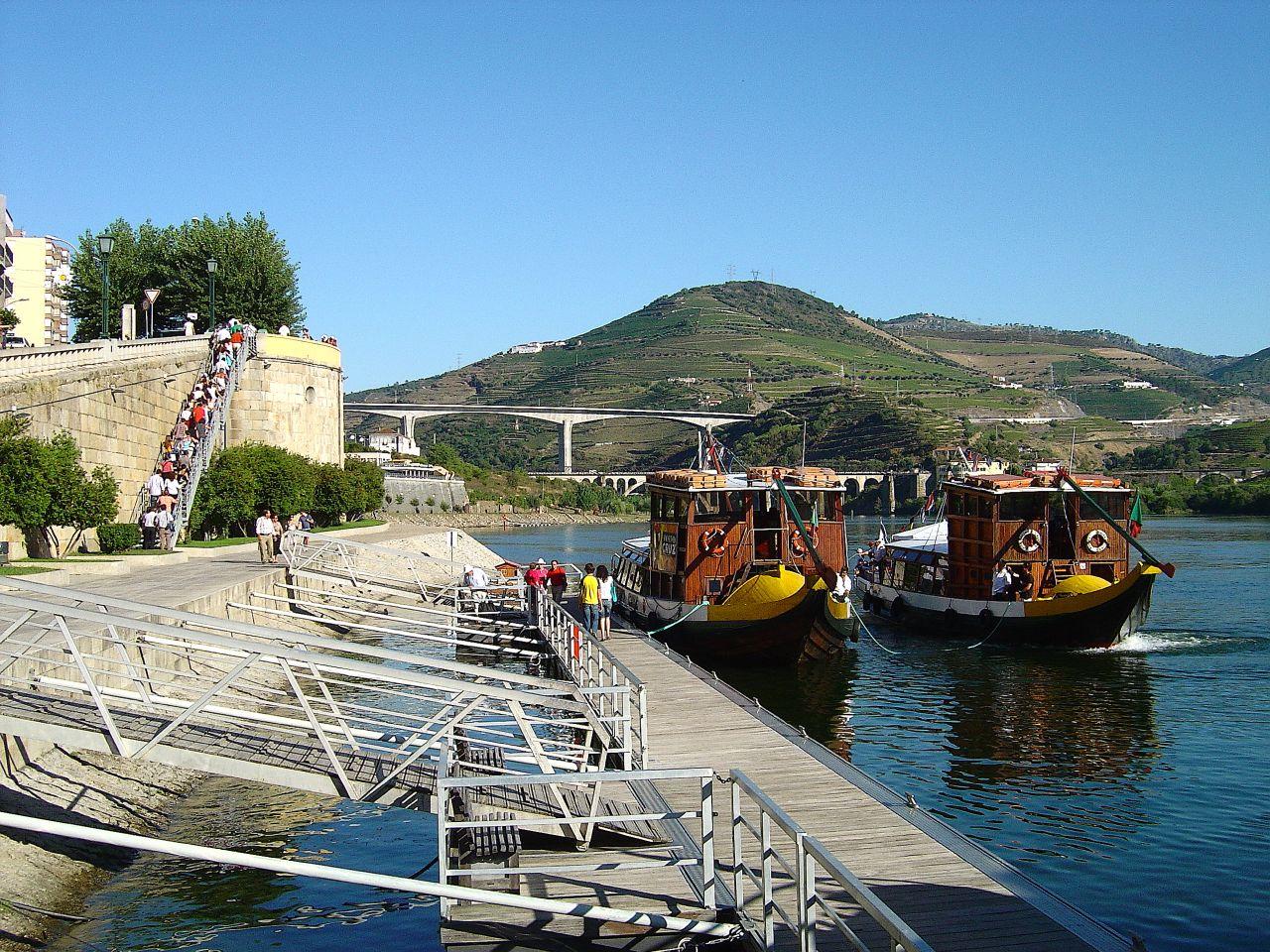
Régua’s relationship with wine is commercial as well as agricultural. VisitPortugal explains its historical role as a departure point for barrels transported downriver to Gaia. That gives the riverside a context beyond scenery: it connects inland production with the city lodges visitors often encounter first. VisitPortugal: Peso da Régua.
The best use of that context is to look at the river as a working route. A museum visit before an estate appointment can make the later conversation more meaningful, because it introduces the wider network rather than only a single producer’s story. You do not need to drink to find this history interesting.
Put the Douro Museum at the centre
The Douro Museum occupies the former Casa da Companhia Velha and interprets the region’s wine culture and landscape. It is a regional orientation stop, not another tasting room. The national tourism listing is useful for the institution’s purpose and location; the museum’s current information should govern admission and operation. Douro Museum listing.
Allow it a real block of attention. Rushing through on the way to a wine appointment misses why it belongs in the day. Look for connections between tools, land, labour and transport, then carry one or two questions into an estate visit. For a mixed-interest party, a museum can also balance a programme that would otherwise revolve entirely around tasting.
A town route with three different kinds of stop
| Stop | Purpose | Transport implication |
|---|---|---|
| Casa da Companhia / Museu do Douro | Regional interpretation | Town-focused visit |
| Crivo, Rua Marquês de Pombal | Traditional arts and crafts | Separate space; establish its visiting arrangement |
| Régua riverfront | Outdoor context and a flexible pause | Keep within the town route |
| São Leonardo de Galafura | Elevated landscape perspective | Separate road excursion |
Start with the Casa da Companhia, the museum building, and its permanent exhibition Douro: Matéria e Espírito. This is the interpretation stop: use it to understand the region before looking for another view. The museum also identifies Crivo, its traditional arts-and-crafts space in a former bakery on Rua Marquês de Pombal. That offers a second subject within a town-focused visit rather than another wine flight. Museum buildings and spaces.
Then make the riverfront the outdoor part of the day. Look back at the relationship between the working wine region, transport and the town, rather than treating the waterfront solely as somewhere to wait for lunch. A meal or a pause finishes this sequence naturally; it does not need to be squeezed between two distant reservations.
This is an editorial route order, not a packaged museum circuit or a claim that every space shares opening arrangements. Begin with the visit that has a fixed entry requirement and keep the waterfront flexible. If your train or replacement-bus connection leaves little time, prioritise the museum and the river over an additional road excursion.
Add São Leonardo de Galafura deliberately
São Leonardo de Galafura is a regional viewpoint associated with the Régua area. VisitPortugal names it among the places to understand the broader landscape. Treat it as an excursion outside the town, with its own approach and return, rather than an attraction automatically included in arriving at the station. Douro viewpoint context.
A viewpoint is most useful after you understand what you are looking at. Pairing interpretation below with perspective above makes a more coherent day than collecting several lookouts without context. Read the viewpoints guide if photography and landscape are central to the trip.
Decide between Régua and Pinhão
Régua suits a museum-led introduction and a practical town anchor. Pinhão is useful for a day structured around its station, river and surrounding estate visits. You can enjoy both on a longer trip, but a single day from Porto may be more satisfying when you give one of them enough time.
If you arrive by rail, compare the actual service and onward connection rather than choosing from a scenic photograph. If you use private transport, put the visit you care about first and let the road route support it. Our Pinhão versus Régua comparison separates the visitor decisions.
Stay, eat and connect without overloading the plan
An overnight in the Régua area can let you separate travel from the main visit and give the museum or an estate its own day. A riverside-town stay and a remote quinta have different evening logistics. Before choosing, decide whether you want to walk to your meal or make dinner part of a planned transfer.
For independent travel, save both the transport details and the venue location offline. For a road day, treat the wine visit and driving arrangement as one decision. Use getting to the valley for the wider transport choice and where to stay for the base comparison. Current timetables, menus and room availability are intentionally not inferred from this guide.
Check collection before buying an excursion
Use experiences from Régua to separate town activities, estate transfers and onward Pinhão trips. The page explicitly has no verified Régua-departing offer. That distinction matters when a regional listing promotes the Douro but collects its passengers only in Porto.
Sources for this guide
Linked at the relevant claims above, and collected here for further reading. Primary-source context accessed 9 November 2026. Indicative routes and comparison verdicts are our editorial analysis; fictional tool data remains separate.
- VisitPortugal: Peso da Régua visitportugal.com
- Douro Museum listing visitportugal.com
- Museum buildings and spaces museudodouro.pt
- Douro viewpoint context visitportugal.com