Read the Douro from west to east: Porto is the city departure, Régua is an inland river-and-museum anchor, Pinhão is a compact wine-country town, and Pocinho extends the rail journey farther upriver. Lamego and the viewpoints above the river are separate excursions, not station exits. The map on this site is a schematic: it explains relationships and travel decisions without inventing distances, driving times or a winery itinerary shared by every tour.
On this page · 7 sections
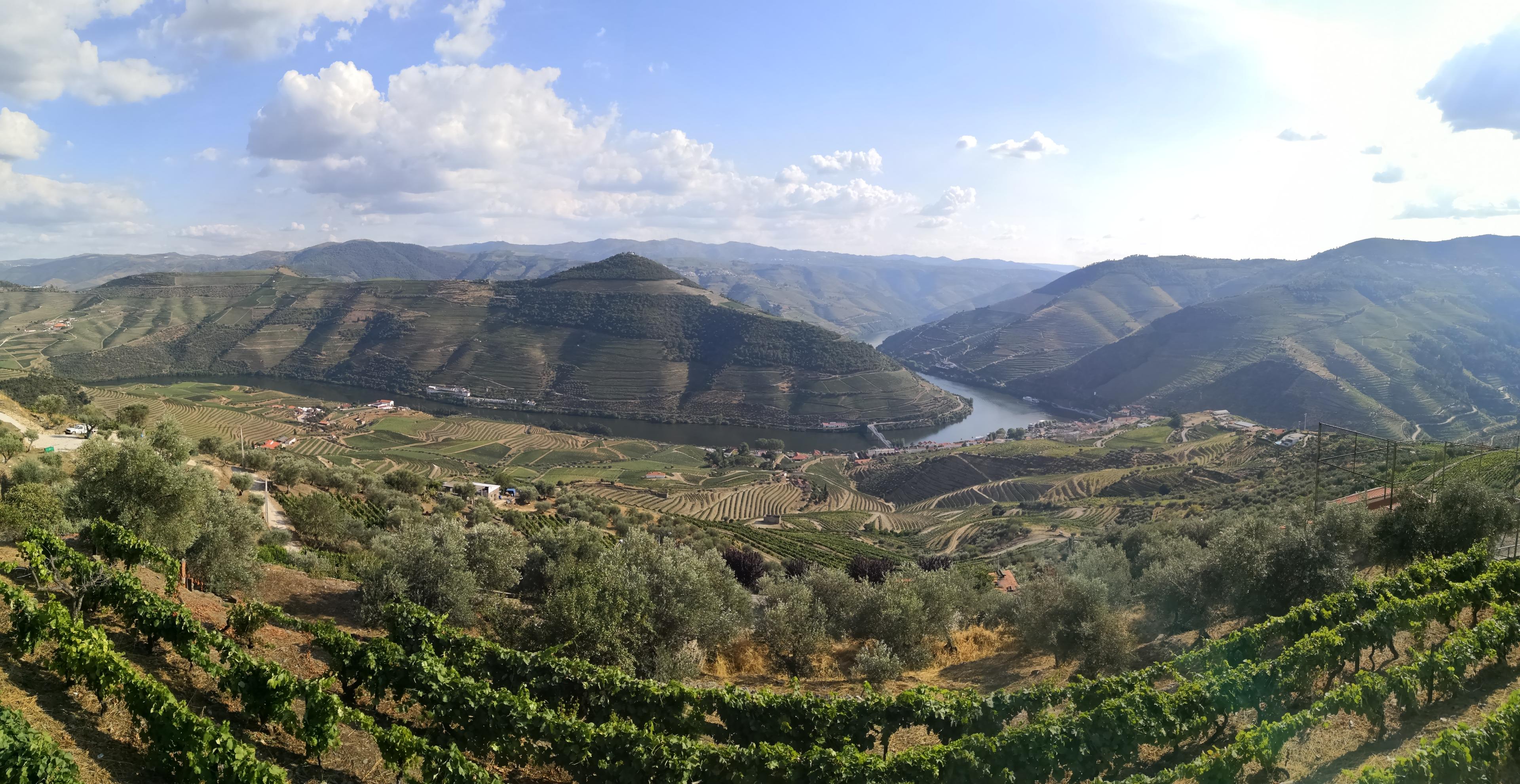
First separate the city from the wine valley
A boat on the Douro does not necessarily visit the Douro wine region. Porto and Vila Nova de Gaia face one another near the river’s Atlantic end; inland sightseeing requires a different journey. This is why a short city bridge cruise and a Pinhão excursion cannot be compared solely by the word “Douro”.
Use two questions when reading a product map: where do I board, and which section do I actually travel? A picturesque river image can show a place that is not on the booked route. The cruise overview explains the modes, while this page provides the regional orientation.
The main anchors on a first visit
| Anchor | Role in the plan | Useful next decision |
|---|---|---|
| Porto / Gaia | Departure city and lodge visits | City wine experience or inland day? |
| Peso da Régua | Museum, river and transport base | Town-led visit or onward journey? |
| Pinhão | Station, river setting and estate-visiting base | Boat, tasting or relaxed town day? |
| Tua | A deliberate stop or river-route reference | What is the onward activity? |
| Pocinho | Farther upriver rail destination | Is the train journey the main experience? |
| Lamego | Heritage excursion away from the railway spine | How will you reach and leave it? |
The broad rail order is supported by the CP Douro line description. It does not mean every service stops at every anchor. The station sequence is geography, not a current timetable.
Group the places around their actual anchor
Around Pinhão, distinguish the town, Quinta do Bomfim and the hillside viewpoint at Casal de Loivos. They can belong to one base without being the same kind of stop. Bomfim offers a winery-and-vineyard visit; Casal de Loivos supplies the elevated landscape perspective. The official Bomfim visitor page describes its visit components. Pick the component you want before connecting the pins.
Around Régua, the museum belongs to the town visit, while São Leonardo de Galafura belongs to a road excursion. Favaios is a separate village-and-food choice, not another name for Pinhão. Lamego is also away from the railway spine. These distinctions matter more than a map crowded with estate logos: each outward excursion changes the transport plan.
For a road day, work from Régua toward a Pinhão reservation, or stay around the booked estate and its nearest useful town. For a rail day, start with what the arrival town can support. A property pin still needs to represent its visitor entrance, not the middle of its vineyard acreage; two places sharing the river need not share a convenient road approach.
Add the vertical dimension
Pinhão’s riverfront and the viewpoint at Casal de Loivos offer different perspectives because they occupy different levels of the landscape. VisitPortugal identifies Casal de Loivos among the region’s viewpoints. That does not make it a casual extension of every town walk.
Treat an elevated viewpoint as a transport decision, especially with young children, limited mobility or hot weather. If you are already on a road itinerary, a viewpoint can fit the movement between stops. If you are arriving independently by rail, the same stop may introduce a new transfer that changes the entire day. See the viewpoints guide before adding one.
Read a tour route as a sequence
A useful tour map distinguishes the departure, actual stops and passing scenery. It should show whether Régua is a visit or simply a route label; whether the boat leaves from Pinhão; and whether the winery is named and confirmed. If the itinerary lists alternatives, it should not present all of them as guaranteed visits.
When comparing two days, translate their routes into the same structure: city departure → valley arrival → activity → meal → activity → return. Then compare the number of changes and the depth of each stop. A route containing more pins can still have less time at the places you care about.
Three map-led ways to choose a day
Compact river-town day: pick Régua or Pinhão, keep one principal reservation, and leave the rest around that anchor. This is the simplest model for someone arriving without a car.
Wine-led road loop: choose the visit first, then add a viewpoint or meal that fits the same geographical direction. Avoid crossing the valley repeatedly just to add a second famous name.
Journey-led river or rail day: travel farther because the changing landscape is the activity. In this version, an extensive winery programme is optional rather than compulsory. You are not failing to “see the Douro” by choosing depth along one route.
How to use this schematic responsibly
Toggle road versus rail-and-river to understand the different planning responsibilities. Select the place names to read the local notes; these controls provide a keyboard-accessible alternative to interpreting the drawing. The route line is illustrative, not an approved navigation track, and it carries no distance scale.
For current rail operation, use the dedicated train guide. For a followable sequence, use one day or two days. Keep the schematic for the question it answers well: which places belong together in the kind of day you want?
Follow the river.
Find your rhythm.
Porto is your starting point, not the vineyard valley itself. Régua and Pinhão are useful anchors further inland.
An inland river-town anchor. A winery stop or boat ride is only included when your itinerary says so.
Read the planning notesOriginal orientation schematic · not to scale · no travel times implied.
Regional orientation: VisitPortugal.
Sources for this guide
Linked at the relevant claims above, and collected here for further reading. Primary-source context accessed 9 November 2026. Indicative routes and comparison verdicts are our editorial analysis; fictional tool data remains separate.
- CP Douro line description cp.pt
- official Bomfim visitor page symington.com
- Casal de Loivos among the region’s viewpoints visitportugal.com